Data in Context
23 Feb 2023
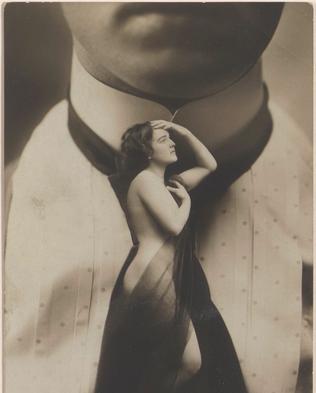
‘Do women have to be naked to get into the Met. Museum?’ is the famous slogan of the Guerrilla Girls, who in 1989 began counting the number of works by female artists on display at the Metropolitan Museum in New York. Their conclusion: fewer than 5% of the works in the modern art section were made by women, while 85% of the nudes depicted women.
Guerrilla Girls, poster 'Do Women Have to Be Naked to Get Into the Met. Museum?', 1989.
‘Art is a male affair’
Just how diverse is the Centraal Museum’s collection? Guided by the principle that ‘to measure is to know’, the museum’s Inclusion & Diversity working group has been exploring this question since 2022. In this article, we share the initial results of the baseline assessment and outline the position of women artists in a (still) predominantly male art world.
For a long time, the work of women artists was not taken seriously or faded into obscurity over time. In the Netherlands, for example, women were denied admission to most art schools until 1871. And prejudices against women’s work persisted well into the twentieth century.
In a review of the exhibition Women’s Palette: Her Art, Her Story (1900–1950) (Museum Dr8888 in Drachten and De Wieger in Deurne), art historian Merel van Tilburg highlights the conservative and sexist art criticism of the early twentieth century. Her analysis clearly illuminates how prevailing ideas at the time—such as ‘art is a male affair’ (1927)—fostered mechanisms of exclusion. Van Tilburg describes how the work of women artists was not regarded as art. ‘Three women exhibited alongside the painters,’ she read in a 1937 issue of De Groene Amsterdammer. Their work was analysed according to entirely different criteria from that of their male colleagues: sensitive, instinctive, earthy, maternal. And, she continues, because of this presumed earthiness, ‘women are incapable of abstraction’—signed, Piet Mondrian. As a result, the work of women artists fell into obscurity and was not systematically preserved, exhibited or discussed. The effects of this are still felt today.
An intervention by the Guerrilla Girls in the exhibition This is America. Visions of the American Dream (2006, Centraal Museum)
A story yet untold
More than thirty years after the Guerrilla Girls, the call for gender equality in museum collections and exhibitions remains painfully relevant. In 2022, the research report ‘A Story Yet Untold’ was published on gender (in)equality in the art world. The results speak for themselves: a survey of eight Dutch museums found that only 13 percent of the collection pieces on display were made by women.
A survey by De Volkskrant of 28 Dutch museums found an average of 17 percent. A different percentage, but again, by no means a reflection of society. The report quotes art historian Griselda Pollock, who describes the importance of balanced representation as follows: ‘If you go to the National Gallery in London, or to the Rijksmuseum or the Louvre, as a visitor, whether you are 5 or 50, you learn that no woman has ever done anything worth displaying or collecting, and therefore that women are not valuable either. The same applies if we are never given the opportunity to see the world through the eyes and experiences of people who are Black, queer, working-class or disabled. We get a distorted picture, and that fuels racism and inequality.’
In her work, artist Pauline Curnier Jardin critiques stereotypical representations of women.
Baseline measurement
The Centraal Museum also recognises the importance of balanced representation, not only in terms of gender, but also in terms of cultural background, skin colour, physical or mental ability, sexual orientation, religion, socioeconomic status, level of education or age.
When preparing exhibitions and programmes, the museum examines which perspectives are missing within its own ranks. We involve external experts and local communities to give underrepresented stories a place in the museum as well. But, like many other Dutch museums, we still have a long way to go.
For example, what about the more than 60,000 objects in our collection? To what extent do they reflect the residents of the city or province of Utrecht? The Centraal Museum’s collection is exceptionally diverse in terms of style, material and period of creation, but to what extent can we say that its makers are diverse in terms of gender, cultural background or socioeconomic status?
The first acquisition of works by a female artist consisted of two portraits of men by Anna Maria van Schurman: Meinardus Schotanus on the left and Professor Carolus Dematius on the right.
In 1830, Mayor Van Asch van Wijck founded the museum to display the city's collection of archaeological artefacts to the public. Over the years, the museum developed into a place that brings together several types of collections, ranging from urban history to fashion, design, and historical, modern and contemporary art.
Each subcollection has its own collecting history, and each discipline has its own characteristics. The fashion collection, for example, was built through donations from upper-class women, who gave their gowns and special garments to the museum. As a result, the earliest clothing primarily reflects a particular social class. But it is more difficult to determine who made those garments. At the same time, in 1917, the first paid fashion curator was appointed—an exceptional development worldwide. Jonkvrouw Carla de Jonge began her career as an archivist of the museum collection, but within a short time she established a permanent costume display and significantly expanded the collection. These distinct collecting histories and the different ways in which the subcollections were catalogued make analysing diversity a complex task.
In 2022, the museum launched a large-scale study into the diversity of its collection. The study began with a baseline assessment to provide greater insight into the nature and composition of the collection, while also offering a perspective on underrepresented stories and objects. The research team, consisting of Chantal Perlee—Senior Documentation & Research Officer—interns Fleur Mulder and Marte van der Salm, and the undersigned, took the first steps. In this initial phase, we focused primarily on gender. We examined the representation of men, women, and makers who do not identify as either, as well as anonymous makers and collectives. We collected the data by object rather than by maker, for each decade from 1830 to the present, and calculated the percentages across the collection as a whole.
A gift from 1918. The earliest work to depict a woman and to have been made by a woman. Adriana Johanna van Leijdenroth, Corridor Interior, 1875.
The initial findings confirm the picture presented by Woman Inc: 5.5% of all objects in the collection were created by female makers, compared with 37.8% by male makers, 9.2% by collectives, and almost 50% by anonymous or unknown makers. In numerical terms, this means 1,870 objects by female makers, compared with 12,710 objects by male makers and 19,066 objects by collectives or whose maker is anonymous or currently unknown, such as coins or other everyday objects.
The first time a work by a female artist was acquired was ‘as early as’ 1886. Unsurprisingly, the acquisition consisted of two portraits of men. It was not until 1918 that the first works by a woman (Adriana Johanna van Leijdenroth) that did not depict a man were acquired. These examples are truly exceptional, as hardly any works by female artists were acquired before 1940.
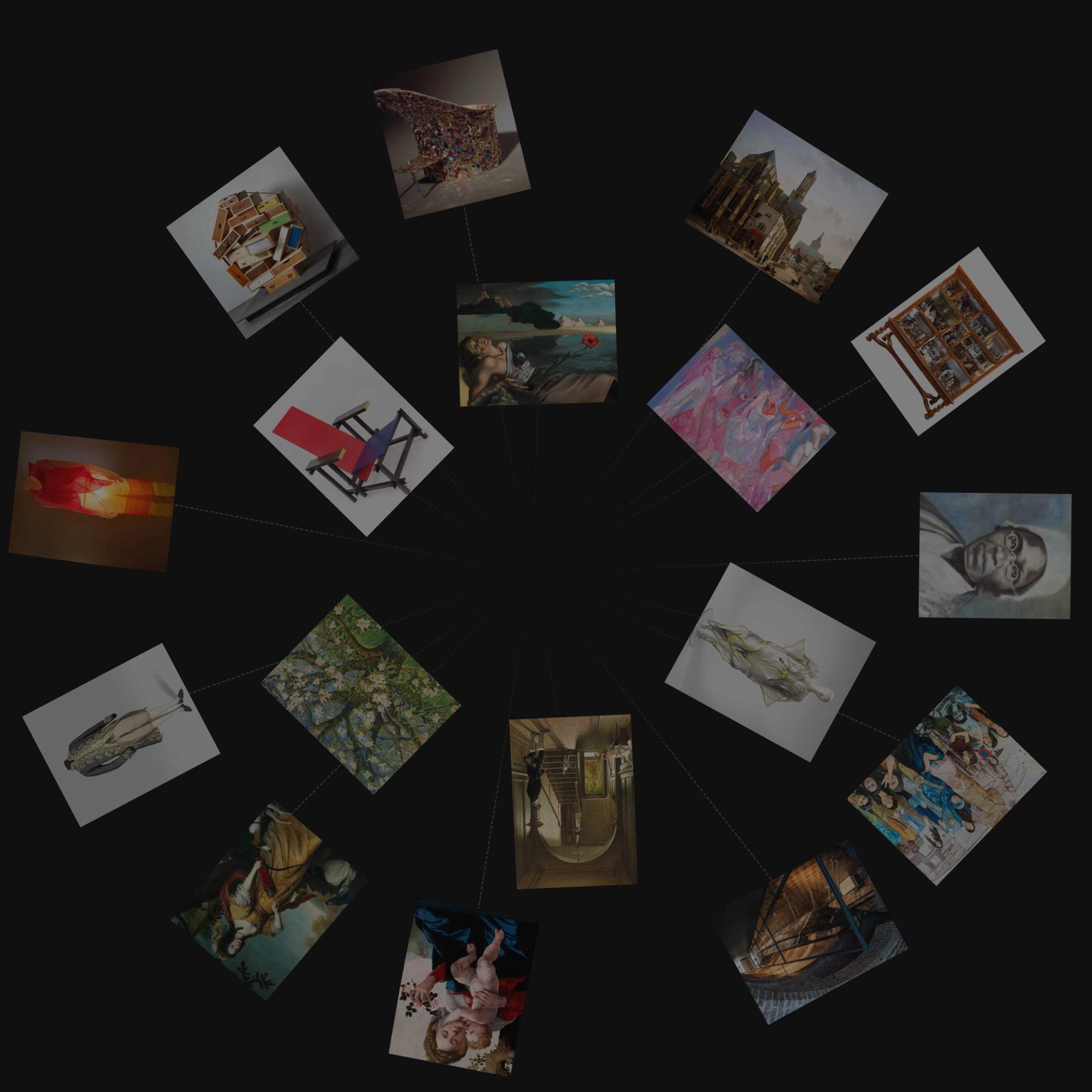
Featured artworks
Context
These figures call for reflection and context. For example, the study raises questions about the binary approach of the collection registration system, which makes it difficult to do justice to LGBTQI+ artists as well. But it also raises other questions: what kinds of objects by women makers are involved? Were they purchased or donated, and what economic and historical value do or did they represent? Were they frequently exhibited, and if so, in what context? Or did they remain mostly in storage?
In the coming period, we will conduct further research into this. We will work with various experts to interpret the data. In doing so, we hope to carry out an in-depth analysis of the collection in terms of diversity. We invite experts to critically examine the research framework and make recommendations for the next steps.
Mechtelt van Lichtenberg toe Boecop was one of the few female painters of the sixteenth century. She may have studied under Jan van Scorel.
A queer walks into a data analyst's office
Read the article A Queer Person Walks into a Data Analyst’s Office, written by Anne van Lierop of The Pink Cube, a platform dedicated to increasing the visibility of queer art and culture. Van Lierop talks to artist Philipp Gufler, who exhibited at the Centraal Museum in 2019 alongside work by Dirkje Kuik, an artist who wrote extensively about her transition in her work. We invited them to look at the collection and the data from a queer perspective.