Traces of the History of Slavery at the Centraal Museum
12 Oct 2024
In the autumn of 2022, Centraal Museum launched an investigation into traces of slavery in its own collection. This large-scale study was conducted by Chantal Perlee, Senior Documentation and Research Officer. Iris Blokker, a member of the Diversity & Inclusion working group, spoke with Chantal about the research and its findings. How was the colonial past of the objects brought to light, and has the way the collection is viewed changed?
Background and objective
What prompted this study?
For a long time, it was thought that Utrecht had no direct ties to the colonial past. The role played by cities such as Amsterdam, Hoorn and Middelburg had been known for much longer. These cities had VOC (Dutch East India Company) ‘chambers’: municipal offices representing the day-to-day administration of the Dutch colonial trading company. Utrecht never had such a chamber or direct access to a seaport. As a result, far less was known about the city’s colonial past. In 2021, the study Slavery and the City of Utrecht, edited by Nancy Jouwe, Matthijs Kuipers and Remco Raben, was published. The study revealed that Utrecht was influenced by colonial history to a much greater extent than previously thought. This prompted us to examine our own collection for traces of the history of slavery.
What was the purpose of this study?
There were several objectives at the outset of this research project. As an organisation, we wanted to investigate the extent to which slavery and the colonial past are present and visible—or can be uncovered—in our collection. One of the main reasons for conducting this research was to determine whether our collection contains looted art. Two questions played a prominent role: Are there objects in our collection with a colonial provenance, and how were they acquired? How did objects contribute to the emergence and perpetuation of a colonial culture? And what stories lie behind these objects?
More broadly, the museum’s Diversity & Inclusion working group, of which I am a member alongside colleagues from every department, aims to raise awareness throughout the organisation. This applies not only to curators, but also to education staff and other colleagues involved with exhibitions and the collection. One of the working group’s objectives is to make the organisation more aware of our own legacy. This will enable us, as a museum, to engage with it responsibly, both now and in the future. We strive to embrace multiple voices and offer a range of perspectives. Research plays a crucial role in this. At times, the way objects have been recorded and the information available may make it seem as though a particular social group or period is not represented in our collection. Further research, however, reveals that this presence does indeed exist and can also be made visible.
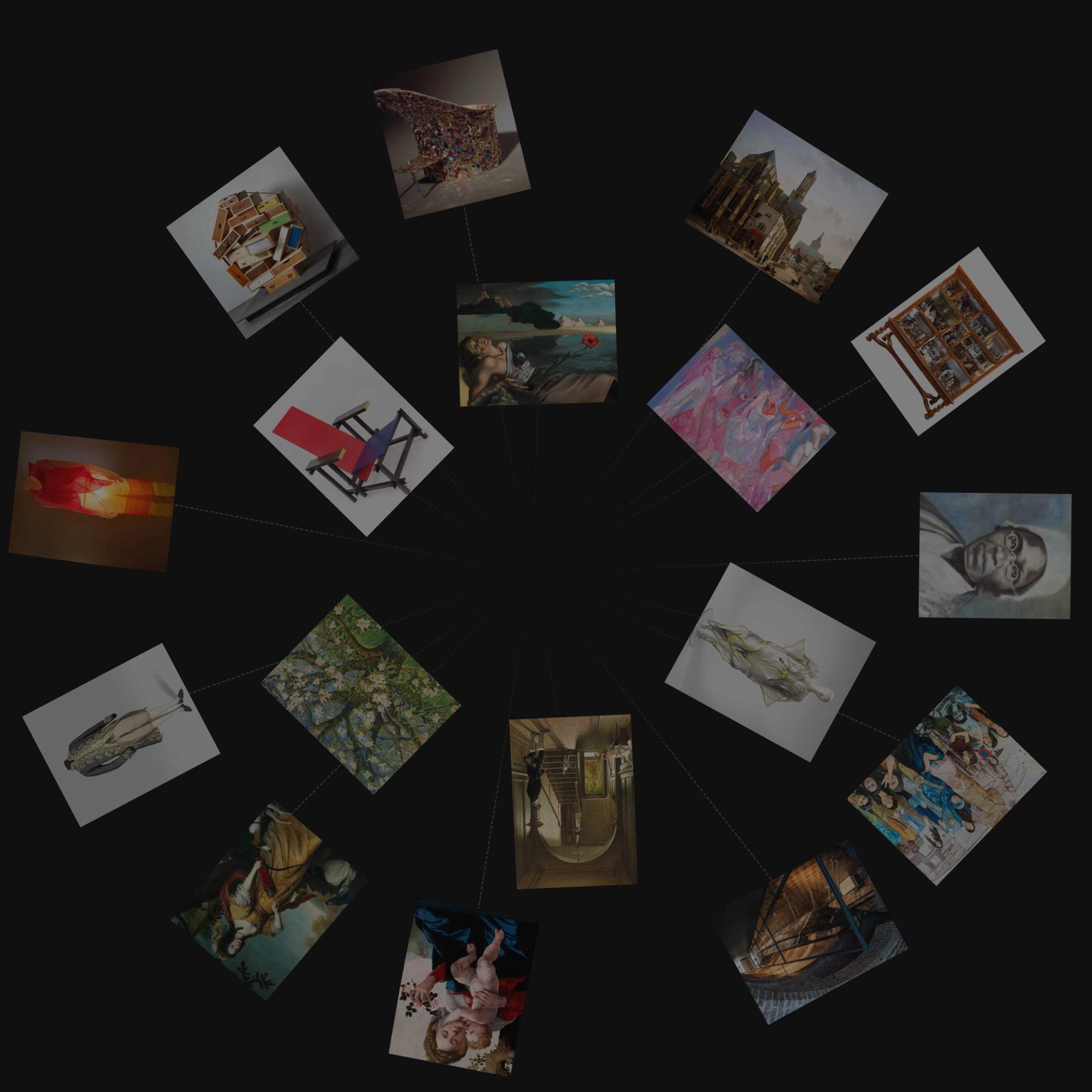
Featured artworks
Growing social awareness
How was this subject viewed within the museum in the past? Was it even considered in relation to the collection?
Just as the city of Utrecht's ties to its history of slavery were thought to be minimal, the same was assumed of our collection. The study Slavery and the City of Utrecht gave us a framework for examining this assumption. I think the biggest eye-opener lies in aspects that had previously been overlooked in this context. One example is that the affluent middle class—those with more capital—derived a large share of their income from the colonial system, for instance by investing in plantations. Their wealth was not an abstract concept, but had been acquired at the expense of other people's lives. Previously, this had not been a focus in how we viewed the collection.
Today, there is growing public awareness of the Netherlands’ colonial past and its enduring impact on our society. More and more institutions have conducted research into this subject, making more knowledge available. A project such as Words Matter, for example, prompted us to critically examine the collection in 2018 and, among other things, revise the titles of artworks with sensitivity to potentially harmful language. The title of a painting by Isaac Israels that contained an offensive word was changed to Portrait of a Black Boxer. (Unfortunately, we do not know for certain who the boxer is, so the title remains generic.) We have also removed sensitive and inappropriate language from our internal descriptions and public-facing texts. We document these changes so that they can continue to be understood in context in the future, and we publish them in the online collection.
The current research into links with slavery felt like a logical next step for the museum. In 2021, the Cultural Heritage Agency of the Netherlands (RCE) published a guide, Research into traces of slavery and the colonial past in collection records, which has been invaluable to our research. The list of terms included in this guide was an important research tool for searching our collection management system.
What was your initial assumption when you started this research?
My initial assumption was that I did not expect to find any colonial looted art. This was because I believe I know the collection well, but also because there was never a period in the collection’s history when ethnographic objects were actively collected. That made it unlikely that we would find such objects.
For the same reason, it was assumed that none of the objects in our collection would have links to the colonial past. Over the centuries, the collecting policy has focused very strongly on the city of Utrecht. When we made this assumption, we did not yet know, of course, what the aforementioned study Slavery and the City of Utrecht would reveal.
How did those findings influence the research into the collection?
When the findings of the external study were published, it became clear that the city did indeed have colonial ties. This naturally challenged the earlier assumptions and gave us concrete leads for examining the collection. By looking at the individuals and families mentioned in the study who are also represented in our collection, I was able to uncover traces of those ties.
In the collection research, I ultimately distinguished between objects with direct and indirect ties to the colonial system.
The complete story of an object
What kinds of objects are we talking about? How did they come to be part of the Centraal Museum's collection?
The relationship with the colonial past was generally not immediately apparent in the objects that emerged during this research. Based on previous research, we knew that the titles or descriptions of several objects in the collection contained inappropriate language. However, this concerned only dozens of objects, a very small proportion of the collection (around 70,000 objects in total). Examples include the aforementioned Portrait of a Black Boxer by Isaac Israels and the mantel clock by Jean-Simon Deverberie. The clock is part of Collection Centraal, the permanent collection display, and has been given a new internal description, a new text for visitors, and an audio clip explaining the object's context. In these works, the connection to the colonial past is quite literally visible on the surface. This is not the case for most of the objects that emerged in the current research.
Researching the collection using the RCE’s glossary brought many everyday objects to light. These included objects associated with spices and raw materials obtained through overseas trade, such as pepper and salt shakers, sugar moulds and a tobacco pouch, as well as fans, umbrellas and costumes. It has now become clear that these objects often entered the collection through people who held shares in this trade. In this way, the research uncovered stories within the collection whose existence we had never previously suspected. Object research provides new context for thinking about the objects in our collection and presenting them in a new light. We are now trying to reconstruct the complete story of an object: not only what it is, but how it was made, by whom, what it means and the context in which it entered the collection—in effect, an object biography.
Many of the objects therefore relate primarily to everyday life. This suggests that colonial history and the formation of the collection are deeply intertwined. What is your perspective on that?
For several wealthy families, everyday life in Utrecht was deeply intertwined with colonial history. They acquired some of their wealth through shares in the VOC or WIC (Dutch West India Company), or by owning plantations or shares in them. Some prominent Utrecht residents served in the city government while also investing money in the colonies. They owned art and lived in lavishly furnished, richly decorated houses. And it is precisely the personal collections and donations of these families that play an important role in the collection of the Centraal Museum.
Besides being an artist, the Utrecht painter Joachim Wtewael (1566–1638) made a great deal of money from the flax trade. He was also one of the first shareholders in the Dutch East India Company (VOC), which earned him a considerable fortune. His wealth, paintings, furniture and tableware were eventually inherited by the Martens van Sevenhoven family. This family became a major donor to the museum. Through a series of marriages, nine affluent families came together within the Martens van Sevenhoven family. Most of them amassed their wealth through the colonial system. Over the centuries, their capital continued to grow, because ‘money makes money’. Through this family, almost 9,000 objects entered the collection of the Centraal Museum, ranging from paintings and cabinets to jewellery.
The colonial past continues to shape the museum in a wide variety of ways and on many different levels. This was one of the key conclusions of this research.
Subcollections
Has the colonial past permeated all of the Centraal Museum's subcollections to the same extent?
Most of the objects with colonial ties are found in the applied arts, urban history and old masters subcollections. However, research using an extensive list of terms and the lists of names from the Utrecht study revealed that objects with ties to slavery can be found in all subcollections, including the fashion collection and the modern and contemporary art collections.
Based on the areas of emphasis that emerged from the research, three main themes were identified in the collection research: ‘provenance of objects and materials’, ‘family ties’, and ‘resistance and abolitionism’.
When we look at where the capital generated by colonial trade ended up, we also need to consider the provenance of objects that were donated to us, for example, 20 years ago. And ‘resistance and abolitionism’ concerns objects—primarily visual and applied art—from around 1800 to the present day.
What the research also shows is that our collection development has relatively few connections with the transatlantic regions and many more with the former Dutch East Indies. A particularly striking example is the ship’s globe that was rediscovered in the collection a few years ago. The globe depicts the voyage of a Dutch East India Company (VOC) ship from Java to the Netherlands.
Surprising discovery
What did you find to be the most surprising discovery in the study?
During the research, a company chest was discovered in the collection. Chests like these were used by the Dutch East India Company (VOC) to transport its own possessions and trade goods. The object appeared in the search results for the term ‘Indonesian’, but at the time it was known only as a ‘chest’. We have now been able to determine what it was used for.
We know that the company chest entered the collection relatively recently, in 1981, as a donation, and that it was made in the 18th century by an Indonesian maker whose identity is unknown to us. Ideally, we would like to know who made it and who owned it. What journey did it make? What was transported in it? The object strongly invites further research.
What now?
What remains a pitfall or blind spot when it comes to the colonial provenance of the museum collection?
That we think we know enough now that we have conducted this research. This study is a starting point for more: more awareness, more questions, and more research. Based on the methodology we used, we know what was investigated and how; the question now is what we are going to do with the research findings. How we will safeguard them for the future. The collection comprises more than 70,000 objects—too many to check one by one. We have a vast repository that you could wander through endlessly and still not have seen everything. Moreover, you need to be able to recognise an object as potentially relevant in this context, and that is precisely what makes it so difficult. After all, these are hidden stories.
The challenge of researching a collection lies largely in the way objects have been catalogued. The provenance history mentioned earlier is important in this regard, but you also depend on specific terms that may or may not have been used previously in the object records. If you cannot find certain objects or information using those terms, that does not mean they are not there. For example, a painting depicting a Black person will not appear in searches for terms such as ‘servant’ or ‘domestic slave’ because, in the past, this person was not identified in any further detail. This is why in-depth research is needed, along with a sound knowledge of Utrecht’s colonial past. As in the city of Utrecht itself, this history does not lie on the surface of the collection. To uncover the colonial past within the collection, you will have to look ‘behind’ the objects.
How can we ensure that this knowledge is not lost, pushed into the background again, and rendered invisible?
In the collection records, I add a note to every object that was part of this research. The results of the research are shared within the organisation, as is the list of terms used. If these objects are revisited in the future, it should be immediately clear what the museum has investigated, and what has and has not been done. Ideally, I would create a separate document for every object identified during the research, with ample attention paid to its provenance and other findings. We are also exploring the possibility of sharing the findings through an exhibition. That would be a wonderful way to share these stories with our visitors as well.
In many cases, further in-depth provenance research is therefore still needed. What opportunities for future research do the current findings suggest?
I think there is an opportunity to use the insights from this research to examine the Centraal Museum’s exhibition history and reception history in relation to colonialism. What do the research findings tell us about the museum as an organization?
I also believe it is vitally important to share this research with people outside the organisation. This blog is a first step. The Centraal Museum often works with sounding-board groups and external experts, and through co-creation, precisely to identify our own blind spots. This is also crucial to the next phase of this research into traces of slavery and our colonial past. We must continue to ask ourselves whether the stories we are now uncovering are the ‘right’ ones and whether they are complete. It is both essential and highly valuable that we allow people from outside the organisation to challenge us on this. Research and reflection are an ongoing process.
You may also be interested in


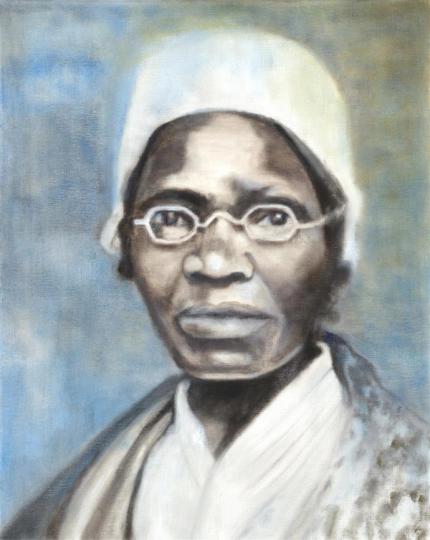
Design by Munir de Vries for wall hanging
Threads of Our Slavery Past
About the image: this is artist Munir de Vries’s design for a monumental tapestry about the history of slavery in the province of Utrecht. Visitors worked together on this tapestry at various cultural venues, including the Spuiten en Stikken exhibition. It is part of the nationwide project Draden van ons slavernijverleden (Threads of Our Slavery Past, which, like the research into the collection, focuses on reflection, dialogue and awareness.